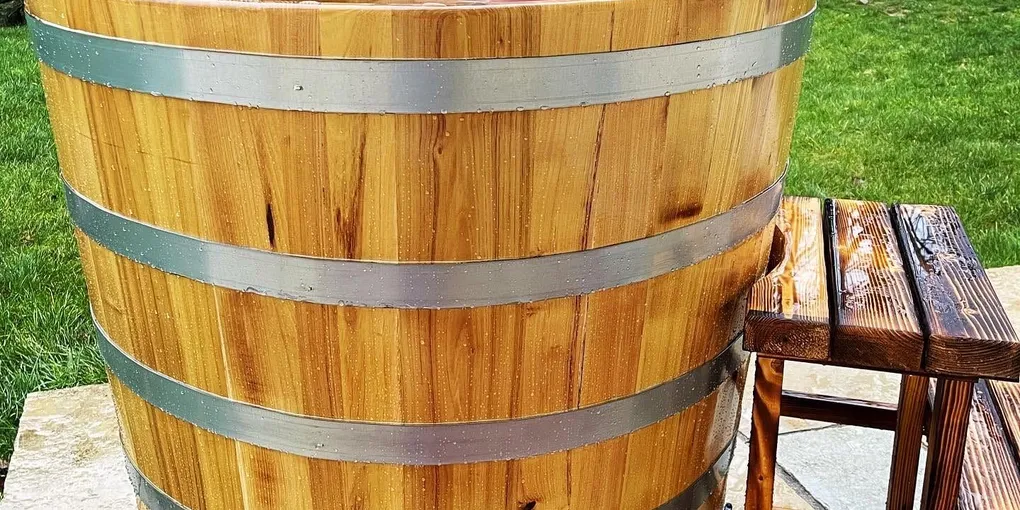
Cold Shower Benefits: What the Evidence Really Shows
I have spent three winters getting into a cold tub in the garden before coffee, and these days I get cold at spas with a plunge pool. But I did not start there, and I do not think you should either. The cold shower is the entry point. It costs nothing, it needs no kit, and the evidence behind it is better than most people assume.
Autophagy tracks cold, breathing, fasting, exercise and sauna in one place, so you can see your practice add up. It is a free iPhone app.

Here is the honest version of what a cold shower does, what the human data supports, what it does not, and how to start without doing anything stupid.
What a cold shower does to your cells
The reason this site exists is autophagy, your cells’ self-cleaning and recycling process. It is the mechanism that clears out damaged parts of a cell before they cause problems, and it is one of the levers behind why hard, brief stressors seem to be good for us.
Cold is one of those stressors. In 2024, researchers put healthy young men through seven days of cold-water acclimation and measured the cellular response directly. They found that autophagic function improved and that markers of cell damage fell as the week went on (the study is here). That is early, small, and short-term, so I would not oversell it. But it is direct human evidence that cold exposure engages the same clean-up machinery this whole approach is built around.
The deeper mechanism has mostly been worked out in animals. Chronic cold drives autophagy in brown fat to recycle worn-out mitochondria and keep heat production efficient (iScience, 2021). We should be careful about reading mouse biology straight across to a human in a shower, but the direction of travel is consistent: cold makes cells clean house.
The benefits the evidence actually supports
Fewer sick days. This is the strongest single result. A randomised controlled trial of more than 3,000 people had them finish their normal warm shower with 30, 60 or 90 seconds of cold water for a month. The cold-shower groups recorded 29 per cent fewer days off sick than the control group (Buijze et al., PLOS ONE, 2016). Worth a caveat: it was self-reported sickness absence, and the number of actual illness days did not differ, so the effect may be as much about resilience and turning up as about immunity itself.
Better sleep and quality of life. A 2025 systematic review and meta-analysis of cold-water immersion found improvements in sleep quality and self-reported quality of life (PLOS ONE, 2025). The effects built up over time rather than appearing instantly.
Metabolic support. Cold switches on brown fat, which burns glucose and fat to make heat. Across human studies, cold exposure increases glucose uptake and improves insulin sensitivity, and resting metabolic rate can rise meaningfully in people with active brown fat (systematic review, 2022). The honest caveat: most of that work used colder, longer, whole-body immersion than a home shower delivers. A cold shower is a gentler dose of the same stimulus.
The claims that do not hold up
I would rather lose you as a reader than mislead you, so here is where the popular story runs ahead of the data.
Mood. The big one. Despite endless claims that cold showers beat low mood, the 2025 meta-analysis found no significant effect on mood overall. Plenty of people feel sharper and calmer after cold, and I am one of them, but the controlled evidence does not yet back a reliable antidepressant effect. Treat the mood lift as a nice-to-have, not the reason to start.
Fat loss. The calorie cost of a short cold shower is small. Cold can support metabolic health, but nobody is showering their way to a lower body-fat percentage. Anyone selling it that way is selling.
Immunity, precisely. The sick-days result is encouraging, but the same trial found no difference in actual illness days, and a meta-analysis found no clear immediate immune effect. So “boosts your immune system” is too strong. “May help you feel robust enough to keep going” is closer.
How cold, and for how long
The useful news is that more is not obviously better. In the big trial, 30 seconds of cold worked as well as 90. So the protocol is simple and forgiving.
For a shower, finish your normal warm wash with 30 seconds of cold, as cold as your tap runs, and breathe slowly through it. That is the whole thing. If you want to build, add time in small steps, but there is no evidence you need to.
For a tub or plunge, which is a stronger stimulus, the rule I used for years was minutes per degree centigrade: 5°C water, five minutes; 8°C water, eight minutes. The dose scales with the cold, and it needs no thinking at six in the morning. If you are moving from showers to a plunge, start well short of that and build.
Want the habit to stick? Log each cold session in the app and watch the streak build alongside your breathing, fasting and training.
Safety: who should be careful
Cold water is a real physiological stressor, so a few genuine cautions.
The gasp reflex is the main risk. Sudden cold makes you inhale sharply and breathe fast, which is dangerous in open water and unpleasant in a shower. A shower is controlled, which is exactly why it is the right place to start. Never do cold open-water immersion alone.
If you have a heart condition, uncontrolled high blood pressure, Raynaud’s, or you are pregnant, talk to your doctor before making cold a routine. Cold raises blood pressure and heart rate acutely. And if you strength train for muscle growth, do not ice straight after a hard session, because cold immediately post-exercise can blunt the adaptation you trained for.
Where cold fits
Cold is one of five practices this app is built around, alongside breathing, fasting, exercise and sauna. On its own a cold shower is a small, pleasant, evidence-backed habit. Stacked with the others, it is part of a broader push on the cellular housekeeping that keeps you working well for longer. If you want the deeper version of the cold story, I wrote a longer piece on cold water and autophagy, and a hub on how to trigger autophagy that ties all five together.
Frequently asked questions
Are cold showers actually good for you?
Yes, within limits. The best human trial, a 2015 randomised study of over 3,000 people, found routine cold showers cut self-reported sick days by 29 per cent, and a 2025 review found improvements in sleep and quality of life. The effects are real but modest, and some popular claims, such as large mood or fat-loss benefits, are not well supported.
How long should a cold shower be?
There is no magic number. The large trial used 30, 60 or 90 seconds of cold at the end of a warm shower, and 30 seconds worked as well as 90. Start with 30 seconds and only extend if you want to.
Do cold showers boost your metabolism?
Cold activates brown fat, which burns energy to make heat, and can raise metabolic rate and improve insulin sensitivity. Most of that evidence comes from colder, longer whole-body immersion, so a short home cold shower is a gentler dose. Do not expect dramatic metabolic change from a shower alone.
Do cold showers help you lose weight?
Not meaningfully on their own. The calorie burn from a short cold shower is small. Cold can support metabolic health, but it is not a weight-loss shortcut.
Do cold showers trigger autophagy?
There is early human evidence that cold exposure engages autophagy, your cells’ clean-up and recycling process. A 2024 study found that seven days of cold-water acclimation improved autophagic function in healthy young men. It is promising but still early, and most of the detailed mechanism work has been done in animals.
Are cold showers as good as a cold plunge?
A cold plunge or cold tub is a stronger stimulus because the water is colder and surrounds you. A cold shower is milder but far more accessible, and accessibility is what makes a habit stick. Start with the shower.